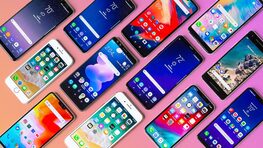
Once geared towards enterprise usage, smartphones today have approximately 31% of U.S. small businesses (SBs, or companies with up to 99 employees) utilizing vendors such as RIM, Palm, Motorola for e-mail accessibility or mobile calendar and contact information on top of their every day cell phone features. According to the latest study by Access Markets International (AMI) Partners, a whopping 20% of SBs who currently use a smartphone have plans to purchase a new one in the next twelve months.
Of the SBs who do not presently have a smartphone, 11% have plans to purchase one - equating to approximately 400,000 U.S. small businesses.
“Small business owners are realizing the necessity to stay connected,” says New York-based AMI-Partners Research Analyst Yedda Chew. “And with the ease of smartphones like Palm Centro or the Blackberry Pearl/Curve, these low-cost solutions are providing SBs a seamless connection between business owners and their customers and employees anytime and from anywhere. What’s more, with 13% of the SB workforce being mobile, staying connected is crucial for the owner to stay abreast of his/her everyday work activities.”
With a compounded annual growth rate of 6%, AMI-Partners forecasts that U.S. SBs will spend a total of US$375 million on these devices alone (without services expense) in 5 years. This is a rate 6 times greater than the estimated spending of medium businesses (MBs, or companies with 100 to 999 employees). That said, brands such as Blackberry and Palm - who currently hold the number 1 and 2 spots for smartphone devices currently used by SBs - have to continuously entice these businesses by providing basic solutions such as email accessibility as well as accessibility to the business’s calendar and contact information.
As data reveals, 84% of Blackberry owners and 68% of Palm owners use their smartphone to access email, while 65% of Blackberry owners and 75% of Palm owners access their calendar and contact information as they are 'on the go.’ Not surprisingly, though, as SBs demand access to additional high-value business applications, AMI-Partners has found that these above-mentioned features are becoming basic functions attached to a smartphone, and business applications such as location-based (field service/delivery) and CRM applications are becoming the trend. Thus, pricing plans from telecom service providers are crucial when it comes to driving adoption as well.
Given the above, partnerships between mobile manufacturers and telecom service providers have been a key to driving adoption.
“It will be interesting to see where the new bold face of RIM - BlackBerry 9000 - will take SBs,” says Ms. Chew. As this new smartphone with 3G technology-enabled and lightning processor installed is sold initially under AT&T, this partnership has a chance to capture the 18% of Blackberry SB owners under T-Mobile, and the 26% of Blackberry SB owners under Verizon.
Posted to the site on 23rd June 2008